Specialist workstream
Mechanical repairs
Diagnosis and restoration of motion, braking, guidance and mechanical transmission systems.
- Motor
- Brake
- Gear
- Pulley
- Bearings
- Guide shoes
- Door mechanism
- Mechanical alignment
Elevator Mart
Loading the latest products, project options, and account details.
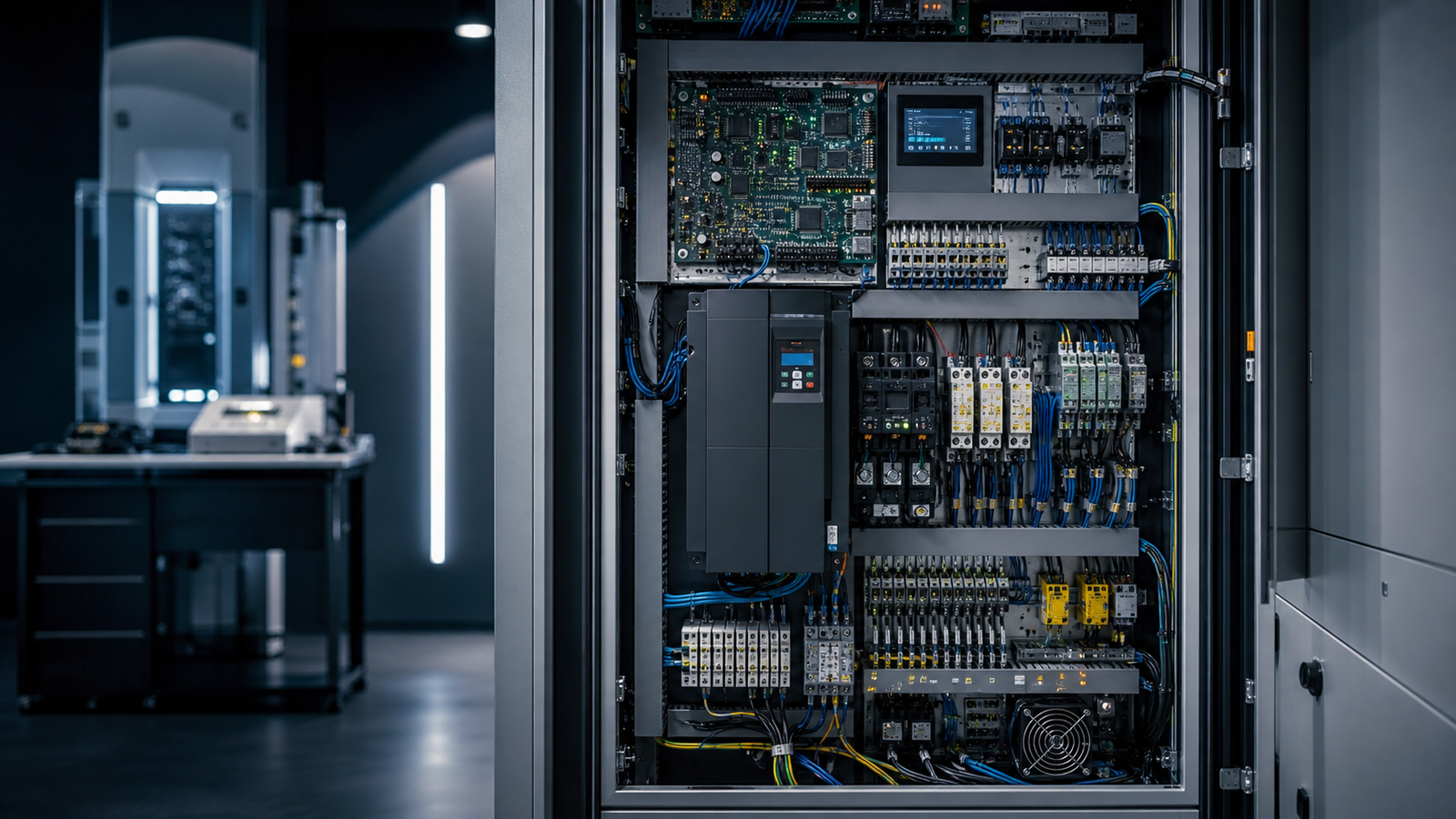
Diagnosis · repair · safety verification
From door faults and control system issues to mechanical breakdowns, our technicians diagnose elevator problems and provide reliable repair solutions.
Common elevator problems we repair
Select the closest symptom. A technician will still diagnose the complete fault before recommending any repair.
Repair process
A controlled workflow protects passengers, equipment and the customer’s decision at every stage.
Repair capabilities
Diagnosis and restoration of motion, braking, guidance and mechanical transmission systems.
Structured fault tracing across power, signals, controls and elevator interfaces.
Door system repair
Door systems combine mechanical alignment, sensing, locks and controls. Repairs address the cause—not only the symptom.
Request door diagnosisDrive, belt, linkages, settings and operating sequence.
Light curtain, obstruction sensing and connection faults.
Landing and cabin door interlock inspection and repair.
Wear, track movement, noise and smooth travel.
Panel clearances, sill path and closing geometry.
Electrical condition, drive and mechanical output.
Panels, tracks, closers, locks and floor-level operation.
Emergency repair support
For trapped passengers or an immediate safety concern, contact local emergency services and the responsible building team. Do not force doors or attempt an untrained rescue.
Dispatch is coordinated by safety priority, location and technician availability.
Reported symptoms guide preparation; on-site checks confirm the actual fault.
The first objective is protecting people and controlling elevator access.
Unsafe equipment can be isolated while an approved repair is planned.
Findings, options, parts and next steps are explained before work proceeds.
Multi-brand repair
Multi-brand service may be available where safe access, technical information, compatible diagnostic tools and suitable parts can be established. Brand logos indicate equipment commonly encountered—not authorized partnerships.
Check equipment supportRepair vs replacement
A confirmed diagnosis, equipment age, safety condition, parts support and repeat-failure history should guide the decision.
A localized fault is confirmed, surrounding components remain serviceable, and repair restores safe operation.
Repair and verifyWear, damage or repeated failure makes a specific component unreliable or uneconomical to repair.
Replace compatible componentObsolete controls, poor efficiency, recurring faults or weak parts support affect multiple systems.
Plan a phased upgradeOverall condition, compliance, structural limitations or lifecycle cost makes extensive repair impractical.
Undertake full assessmentSpare part availability
Our marketplace and service teams can help identify compatible replacement parts using equipment details, model references, photographs and part numbers.
Find Spare PartsWhy choose us
The objective is safe, reliable restoration—not replacing parts without confirming the fault.
Field-led assessment across elevator subsystems.
Structured fault tracing before repair recommendation.
Passenger and equipment safety governs every action.
Findings, options and limitations explained clearly.
Compatible parts selected for the installed application.
Operation, safety, doors and fault clearance verified.
Preventive support helps reduce repeat failures.
Repair FAQ
Possible causes include door interlocks, controller faults, power loss, safety-circuit activation, drive or motor issues. Stop using the elevator and arrange professional diagnosis.
Keep passengers calm, use the alarm or emergency communication, notify the building team and call qualified help. Never force doors or attempt an untrained rescue.
It depends on fault complexity, diagnostic access, part availability, equipment condition and required testing. A technician can estimate the work only after diagnosis.
Often yes, but parts support, safety condition, recurring failures and total lifecycle cost may make modernization or replacement the better decision.
Multi-brand repair may be available after confirming documentation, diagnostic access, compatible parts and technician capability for the installed system.
Options may include a verified compatible replacement, engineered adaptation, controller or subsystem modernization, or complete replacement where safe support is no longer practical.
Request a technician
Share the visible symptom, building, equipment and passenger status. The service team will triage the request and coordinate the appropriate next step.
Professional fault support
Move from symptom to safe diagnosis with a structured repair request.
Request a Technician